
Katy, TX Real Estate: Master-Planned Communities and Market Trends
Author
JaseBud
Date Published

Katy's real estate market runs on three things: top-rated Katy ISD school zones, master-planned-community inventory, and the I-10 commute equation. A typical single-family home in Katy lands somewhere between $400,000 and $800,000, with new builds in established communities like Cinco Ranch and Cross Creek Ranch clustering near the middle and lots in older sections of Old Katy and far western Fulshear pushing the edges.
Here's what a Houston buyer actually needs to know before writing an offer.
The master-planned communities, ranked by tenure
Cinco Ranch opened in 1991 and is the foundational Katy master-planned community: about 7,600 acres, more than 18,000 homes, multiple HOA-maintained pools, golf, and clubhouse facilities. Cross Creek Ranch (developed by Newland) is the newer-build flagship on the far west side, still adding sections. Firethorne, Grand Lakes, Falcon Ranch, Tamarron, Jordan Ranch, and Marlton Manor fill in around them. Most communities run mandatory HOAs in the $700 to $1,800 annual range, with some master-planned developments adding MUD (Municipal Utility District) taxes on top of property tax.
Price by school zone
Katy ISD zoning drives a measurable premium. Homes feeding Tompkins, Seven Lakes, and Cinco Ranch high schools, the consistently top-ranked campuses, typically command 5 to 15 percent over otherwise comparable homes in zones for the older comprehensive high schools. Buyers commonly ask agents to filter by school zone before community. Read our Katy ISD schools guide for the comprehensive-campus breakdown.
New construction vs. resale
Katy is one of the most active new-construction markets in the Houston region. Perry Homes, David Weekley, Highland Homes, Toll Brothers, and Lennar all carry active inventory in the master-planned communities. New-build pricing typically beats inner-loop new construction by a wide margin on square footage but loses on lot trees and neighborhood walkability. Resale homes in the original Cinco Ranch sections sit on more established lots with mature landscaping. The trade-off is the standard Houston-area question of newer-and-bigger versus older-and-rooted.
The flood question
Large parts of west Houston flooded badly when the Army Corps released water from the Addicks and Barker reservoirs during Hurricane Harvey in 2017. Some neighborhoods in the upper reservoir pool area, including parts of north Cinco Ranch and the older Mason Creek subdivisions, took on significant water. Pull the FEMA flood map and the post-Harvey reservoir inundation map before writing any offer. Our Houston flood zones map covers the broader regional picture, and our Houston hurricane preparation guide walks through what to ask about a specific property.
Commute math
Most buyers underestimate the Katy commute. Downtown is roughly 30 miles via I-10: 35 to 55 minutes off-peak, often 70-plus minutes inbound between 7 and 9 a.m. The Katy Managed Lanes HOV cuts that for carpoolers and Park & Ride users. The Energy Corridor (just east, around Eldridge Parkway) is the friendlier office cluster, 15 to 25 minutes from most Katy communities. Walk the commute before you commit; see our I-10 Katy Freeway guide and METRO Houston Park & Ride guide for the daily reality.
What's changing in the market
Three patterns to watch. First, the Grand Parkway opening west of Katy has pulled the development edge further west, with Fulshear and Brookshire now functionally part of the broader Katy commuter shed. Second, post-Harvey, buyers are more flood-aware and pay closer attention to MUD coverage and elevation certificates. Third, remote work has softened (but not eliminated) the school-zone premium, with some families accepting longer commutes for slightly less competitive school zones, then trading back when the kids hit middle school.
The honest summary
Katy real estate works when the school zone, the community, and the commute all line up. It does not work when any one of them is wrong. Read the disclosure carefully, pull the flood map, drive the commute at 8 a.m. on a Tuesday, and walk the master-planned community amenity center on a Saturday. If those check out, Katy delivers at scale, on price, and with the school zone most Houston inner-loop neighborhoods can't match. For broader area context, see our Living in Katy, TX overview.

Downtown Houston condo and loft market: 2026 price bands, the buildings buyers actually chase, HOA fees, and the flood questions every buyer should ask.

River Oaks real estate sits at a $2.5M median. Here is how Houston's tightest luxury market works — deed restrictions, country club access, taxes, and resale.

Bellaire, TX real estate: original 1950s ranches at $500K-$800K, new builds at $1.2M-$2.2M. HISD's top-rated Bellaire HS zone keeps the market durable.

Cypress, TX real estate: Bridgeland, Towne Lake, Coles Crossing, and Fairfield price ranges, Cy-Fair ISD school zones, and flood-zone notes for the northwest Houston market.
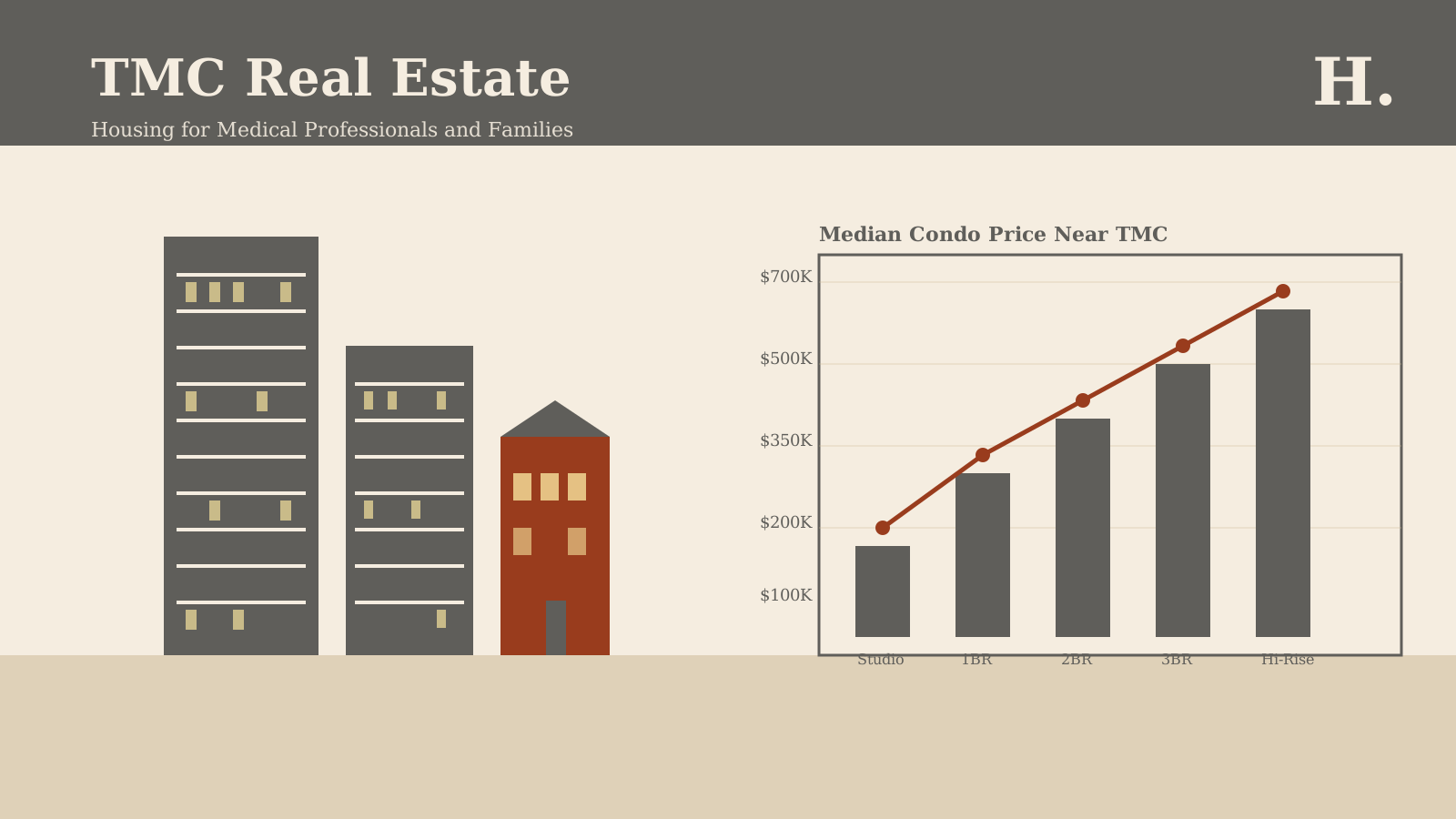
Texas Medical Center real estate in Houston: resident-physician hi-rises, Fannin corridor condos, patient-family rentals, and where to look for single-family homes near the TMC.