
Texas Medical Center Real Estate: Housing for Medical Professionals and Families
Author
JaseBud
Date Published
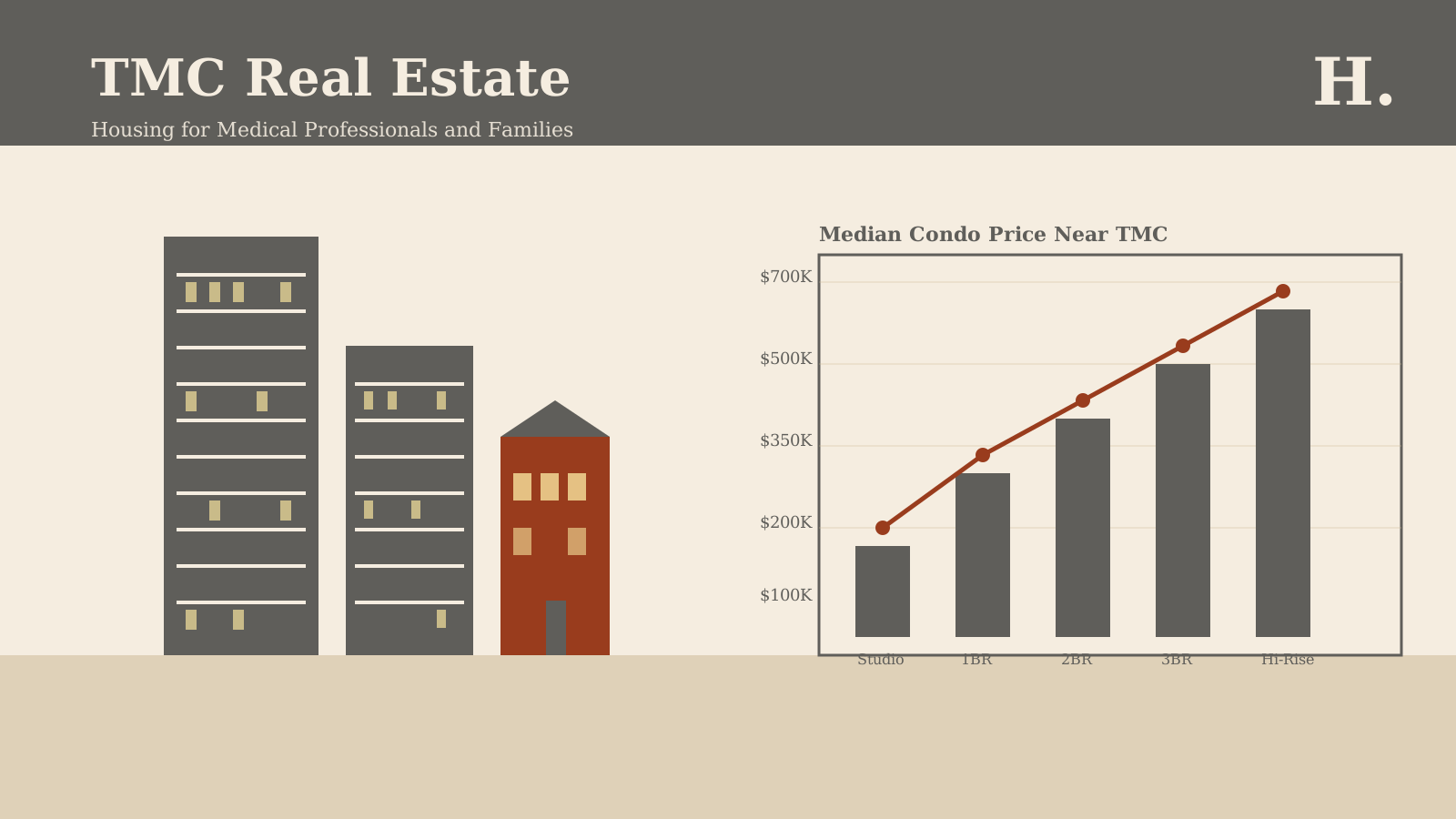
The Texas Medical Center has roughly 120,000 daily workers, more than 10 million patient visits a year, and the most concentrated demand for short-term and resident-physician housing of any neighborhood in Houston. The real estate that's emerged inside and around the 1,345-acre campus reflects that: a deep stock of hi-rise rentals, a smaller stock of condos that turn over with each medical training cycle, and a near-zero supply of detached single-family homes inside the medical district proper.
Here's the honest breakdown of what's available, where it sits, and what it typically costs.
The Holcombe corridor: resident-physician hi-rises
Holcombe Boulevard along the south edge of the TMC is the densest stretch of resident-physician and nurse rentals. Buildings like 2125 Yorktown, the Skyhouse Houston Med Center, The Carter, Pearl Marketplace at Midtown (a short hop), and the buildings clustered around 5959 South Main run studios and one-bedrooms in the $1,500 to $2,200 range, with two-bedrooms typically $2,500 to $3,500. Most carry month-to-month options at a premium, which is the whole point: medical training cycles are short and unpredictable.
The Fannin corridor: METRORail-adjacent condos
The Fannin Street corridor immediately east of the TMC sits along the METRORail Red Line. The Mosaic, The Med Center Suites, and a handful of older 1970s and 1980s condo buildings (Hermann Park Towers, Park Plaza Hospital Tower) handle the longer-term resident-physician and faculty market. Studio condos in the older buildings still trade in the $150,000 to $250,000 range; one-bedroom condos in newer towers run $300,000 to $500,000. HOA dues are higher than the Houston average because of 24-hour staffing and security.
Patient-family rentals: weekly and monthly furnished
A meaningful segment of TMC-adjacent housing is rented by the week or month to patient families traveling to Houston for treatment. Buildings near MD Anderson and Methodist run furnished one-bedrooms at $3,500 to $6,000 a month, with utilities and Wi-Fi included. The major TMC hotels (Crowne Plaza, Hilton, Marriott, Cambria) handle the shorter-stay end of this market. For a sense of what to expect when arriving, see our best time to visit Houston guide.
Single-family homes: the closest options
Almost no single-family homes sit inside the formal TMC footprint. The closest detached-house neighborhoods are Riverside Terrace (across the rail line on the east side of the campus), Old Braeswood (south of Brays Bayou along North Braeswood), Southgate (a small enclave between Rice and the TMC), and parts of Southampton Place. Older single-family stock in those areas runs $700,000 to $1.5 million, depending on lot and renovation level. Rice University faculty and tenured TMC researchers fill most of this inventory; turnover is slow.
What it costs by household type
Resident physicians and nurses on training salaries typically budget $1,400 to $2,200 for housing. Attending physicians and senior faculty either own in Southampton or Old Braeswood or rent two-bedroom condos in the Fannin towers at $3,000 to $4,500. Patient families pay $3,500 to $6,000 a month for furnished short-term rentals or hotel rates. Faculty researchers with families typically choose to live further out (West University, Bellaire, the Heights, Sugar Land) and accept the commute.
Flood, storm, and what to ask before signing
Tropical Storm Allison flooded the TMC's basements in 2001, prompting more than $50 million in flood-mitigation work. Most TMC member institutions are now well-protected at the building level. Apartments and condos surrounding the campus are not necessarily covered by the same submarine doors and stormwater detention. Always pull the FEMA flood map for the specific address. See our Houston flood zones map and our Houston hurricane preparation guide before writing an offer.
The TMC3 effect on housing demand
The new TMC3 collaborative research campus opened in 2024 on a 37-acre parcel southwest of the historic core, a $1.85 billion project anchored by Baylor, UTHealth, MD Anderson, and Texas A&M. The expansion has pushed mid-rise and hi-rise residential development further south along Old Spanish Trail and into the southern Almeda corridor. Expect housing prices in the immediate TMC3 ring to continue tracking research-staff growth. For background on what TMC3 is actually building, see our Texas Medical Center research overview.
The honest summary
Med Center real estate works for medical professionals on training stints, faculty researchers, and patient families. It works less well for traditional Houston buyers seeking single-family homes, school-zone-driven communities, or walkable urban dining. The market premium here is short-term flexibility and proximity to clinical practice, not square footage or yard space. For broader context on living in the area, see our Texas Medical Center neighborhood guide, and for families weighing schools, our schools near the TMC parent guide.
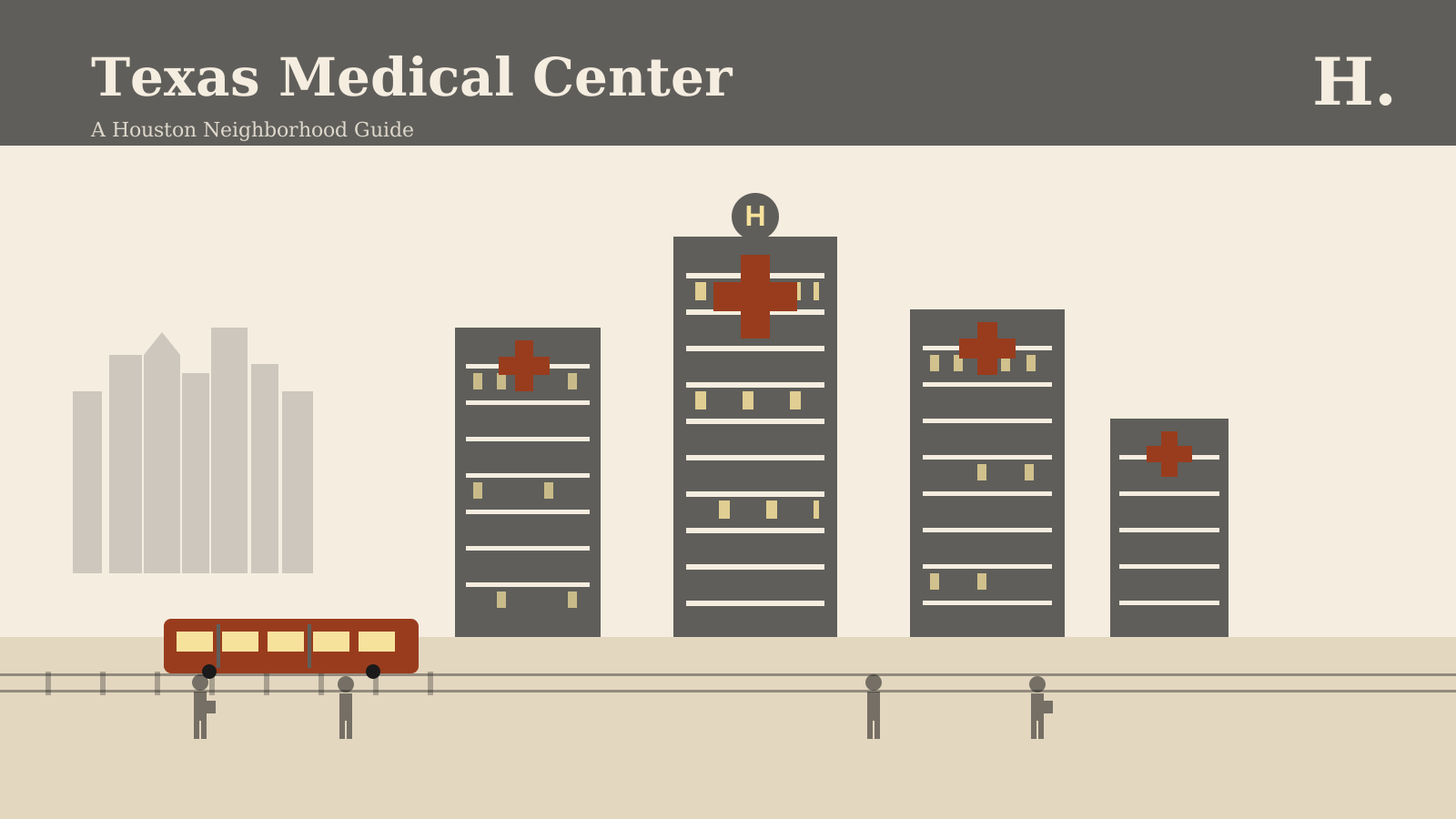
A Houston neighborhood guide to the Texas Medical Center area: the 1,345-acre TMC campus, METRORail Red Line access, hospital-adjacent housing, schools, and what life looks like here.

Fort Bend ISD schools in Sugar Land, TX: Clements, Dulles, and Stephen F. Austin high schools, magnet programs, zoning by subdivision, and what to ask on a tour.

Sugar Land, TX real estate guide: First Colony, Sugar Creek, Telfair, Riverstone, Greatwood, Imperial. Prices, taxes, school zoning, and what to know before buying.

Sugar Land, Texas sits 19 miles southwest of Houston with top Fort Bend ISD schools, master-planned communities, Constellation Field, and Smart Financial Centre. The full guide.

Schools in Upper Kirby Houston: HISD zoned campuses, Vanguard magnet options, and the private schools families consider. A parent's guide to the choices.