
Living in the Texas Medical Center Area, Houston: A Neighborhood Guide
Author
JaseBud
Date Published
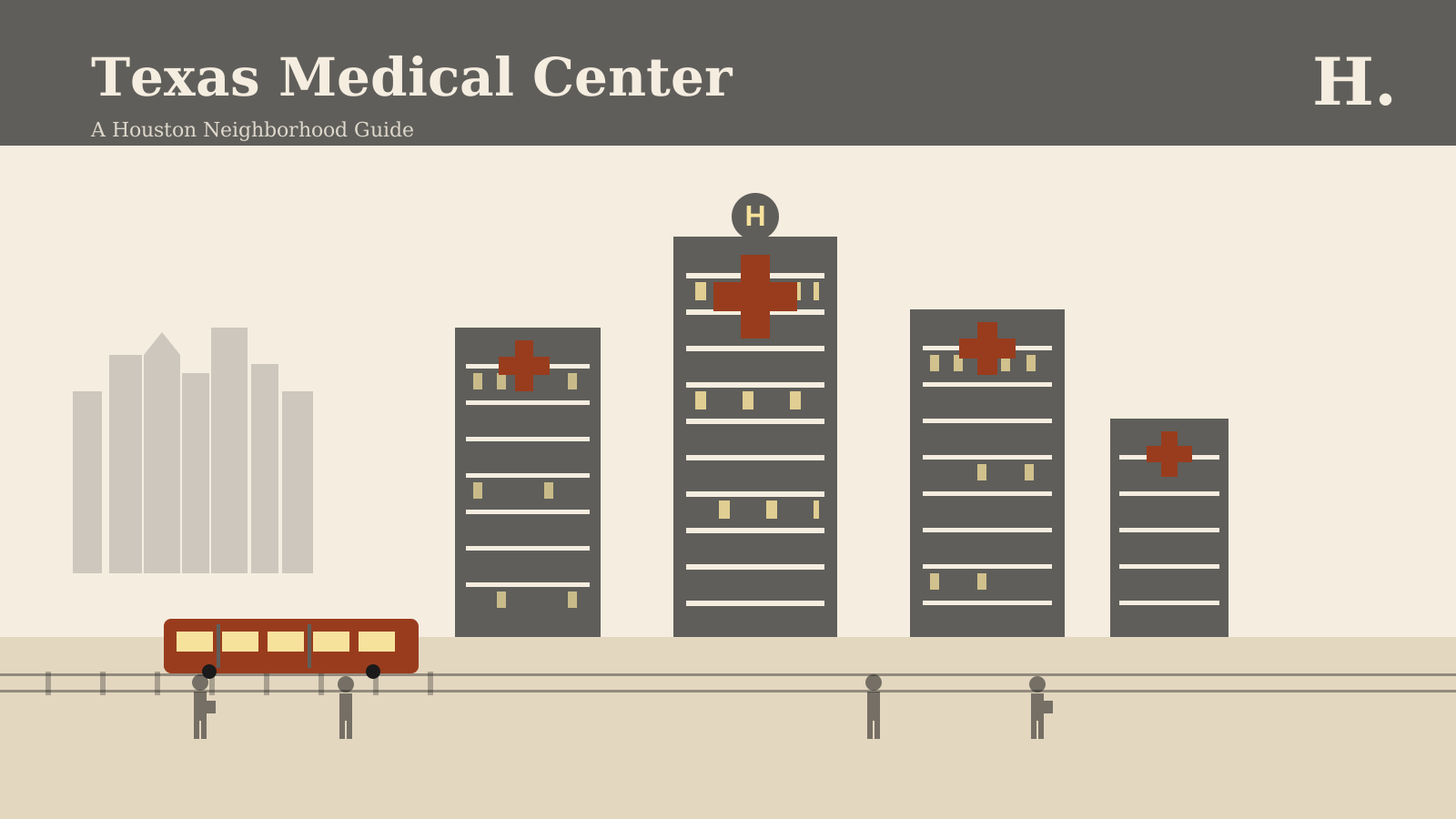
The Texas Medical Center sits just south of Hermann Park along Fannin Street, 1,345 acres packed with 61 member institutions including MD Anderson Cancer Center, Houston Methodist, Memorial Hermann, Texas Children's Hospital, and Baylor College of Medicine. About 120,000 people work inside the campus on any given day, and the medical complex handles more than 10 million patient visits a year, the largest concentration of medical services anywhere in the world. Living "in the Med Center" is shorthand for living inside or immediately around that campus.
Most full-time residents in the area are medical professionals (resident physicians, nurses, researchers, faculty) or graduate students attending UTHealth, Baylor, or the University of Texas Health Science Center. Short-term residents are patient families staying weeks or months while a relative is treated. The result is a 24/7, transient, internationally diverse neighborhood that does not look or feel like any other part of Houston.
What "Med Center" actually means
The TMC core runs roughly from Holcombe Boulevard on the north to Old Spanish Trail on the south, and from Fannin to Almeda. Member institutions cover most of that footprint, but apartment towers and condo buildings line the edges (especially along Holcombe, Old Spanish Trail, and the Fannin corridor) and serve the resident-physician and nurse market. The new TMC3 collaborative research campus opened in 2024 on a 37-acre parcel southwest of the historic core, a $1.85 billion project anchored by Baylor, UTHealth, MD Anderson, and Texas A&M Health Science Center.
Getting around: the METRORail and the parking reality
The METRORail Red Line is the single biggest reason living in or near the Med Center works. The line runs straight up Fannin Street with multiple TMC stations (Memorial Hermann/Houston Zoo, Dryden/TMC, TMC Transit Center, Smith Lands), connecting the campus to Downtown, the Museum District, Midtown, and Reliant Stadium (formerly NRG Stadium). If you commute by car, prepare to pay for a permanent garage space at your home institution and to circle for ten minutes during morning rounds. See our METRO Houston guide for the broader rail and bus picture.
Hotels for patient families
Most patient families stay at hotels along Holcombe and Main near the TMC. The mainstays are the Crowne Plaza Houston Med Center, Hilton Houston Plaza/Medical Center, Houston Marriott Medical Center/Museum District, Cambria Hotel Houston Med Center, and Holiday Inn Houston Medical Center. Several have direct shuttles to MD Anderson, Methodist, and Texas Children's. If you're visiting from out of town for a procedure or a long treatment cycle, our best time to visit Houston guide covers seasonality and what to plan around.
What the neighborhood is actually like to live in
The Med Center is loud at the edges (sirens, helicopters, traffic) and surprisingly quiet inside, with tree-lined campus walkways, Hermann Park spilling over the northern boundary, and the McGovern Centennial Gardens within walking distance. Resident physicians and nurses pack into the apartment towers along Holcombe, Cambridge Street, and Old Spanish Trail. Sit-down restaurants outside the hospital cafeterias are thin (Hilton TMC's in-house restaurants, Pho One on Almeda, and Lucille's a few minutes north in the Museum District do most of the heavy lifting). For the full restaurant rundown, see our best restaurants near the Texas Medical Center guide.
Real estate, schools, and the day-to-day questions
Housing in the Med Center area is dominated by hi-rise rentals built for resident-physician and nurse stints. Few single-family homes sit inside the medical district itself; the closest single-family stock is across the rail line in the Museum District, Riverside Terrace, and southern Third Ward. The closest HISD-zoned campuses for families with kids are Roberts Elementary, Cullen Middle, and Lamar High School. For deeper dives, see our Texas Medical Center real estate breakdown and the schools near the TMC parent guide. If you have weekends to fill while a family member is in treatment, our things to do near the Med Center guide covers Hermann Park, the Museum District, and the Houston Zoo, all within walking distance of the TMC.
Weather, flooding, and storm prep
The Med Center sits inside a 100-acre flood-mitigation footprint after Tropical Storm Allison flooded most of the campus basements in 2001. Member institutions have since spent more than $50 million on submarine doors, raised utility plants, and stormwater detention. Apartments outside the campus do not necessarily have the same protection. If you're moving in, check the Houston flood zones map for your specific address and read our Houston hurricane preparation guide before June 1.
Why the Med Center keeps growing
The recent TMC3 buildout and the parallel research expansion at member institutions matter for anyone living here. Daytime population and lab-space demand are still rising. Our guide to what the world's largest med campus is working on covers the research priorities driving the latest construction. The honest summary: living in the Med Center works if you work here, or if a family member is being treated here. It does not work for most other Houston use cases (commuting elsewhere, walkable urban dining, school-zone-driven family living). But for the people it does work for, no other Houston neighborhood comes close.

Local guide to Houston's Museum District: 19 museums, Hermann Park, the METRORail Red Line, restaurants, schools, and real estate by the numbers.

A Houston neighborhoods guide to all 33 covered areas — from Montrose and The Heights to Katy, Sugar Land, and Clear Lake. Pick the right one for you.

Jobs in Houston span energy, the Texas Medical Center, NASA, the Port of Houston, finance, and a growing tech scene. Read our sector-by-sector guide before you apply.